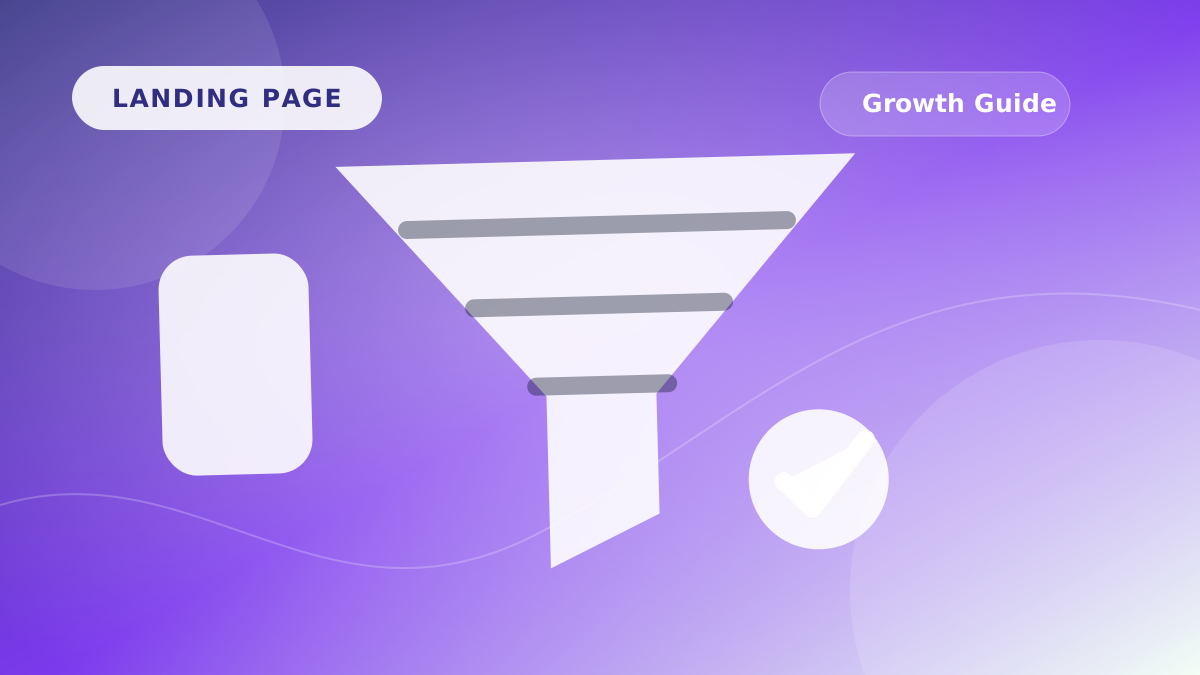
A high-performing website should guide visitors step by step. Instead of making users think too much, it should make the next action obvious and reduce friction wherever possible.
This guide explains landing page in a simple, practical way. You will understand what it means, why it matters, what people often get wrong, and how to improve it without making the process unnecessarily complicated.
If you are a business owner, marketer, or service provider trying to strengthen your online presence, learning landing page can help you make better decisions and create a stronger digital foundation.
What conversion-focused thinking means
A page built around landing page should guide visitors toward one clear action. That action could be a form submission, a WhatsApp message, a booking request, or a purchase. The goal is to remove doubt, show value quickly, and make the next step feel easy.
Conversion-focused work often improves fastest when teams remove friction before adding more elements. Simpler forms, clearer value statements, and stronger social proof often outperform pages that try to say too much at once. That is why refining landing page can create meaningful gains without a total rebuild.
Why many pages fail to convert
Most conversion problems happen because the page is too vague or too crowded. Visitors may not understand the offer, may not see a clear next step, or may not trust the brand yet. Strong landing page solves these issues by creating clarity, reducing distractions, and placing trust signals where they matter.
Conversion-focused work often improves fastest when teams remove friction before adding more elements. Simpler forms, clearer value statements, and stronger social proof often outperform pages that try to say too much at once. That is why refining landing page can create meaningful gains without a total rebuild.
Elements that improve results
Pages that perform well usually have a strong headline, clear benefits, a visible call to action, and proof such as reviews, examples, or guarantees. They also answer common objections before the visitor asks them. That is why landing page is closely linked to messaging, layout, and user experience.
Conversion-focused work often improves fastest when teams remove friction before adding more elements. Simpler forms, clearer value statements, and stronger social proof often outperform pages that try to say too much at once. That is why refining landing page can create meaningful gains without a total rebuild.
How to improve over time
The best results rarely come from guessing once and leaving the page unchanged. Review form quality, button clicks, page behavior, and user drop-off points. Then refine the copy, layout, or offer. A simple testing mindset can make landing page much more effective over time.
Conversion-focused work often improves fastest when teams remove friction before adding more elements. Simpler forms, clearer value statements, and stronger social proof often outperform pages that try to say too much at once. That is why refining landing page can create meaningful gains without a total rebuild.
How to get started with landing page
A good first step is to review your current setup honestly. Look at what is clear, what feels outdated, and what may be causing friction. From there, make focused improvements that strengthen landing page over time instead of trying to fix everything at once.
Conversion-focused work often improves fastest when teams remove friction before adding more elements. Simpler forms, clearer value statements, and stronger social proof often outperform pages that try to say too much at once. That is why refining landing page can create meaningful gains without a total rebuild.
Quick checklist
- Give each page one main goal.
- Use strong headlines that explain value quickly.
- Reduce form fields wherever possible.
- Place social proof near the call to action.
- Review user behavior and improve weak sections over time.
Frequently asked questions
Why is landing page important?
landing page matters because traffic alone does not grow a business. What matters is turning visitors into leads, calls, messages, or customers.
What usually hurts conversion performance?
Confusing copy, weak trust signals, poor mobile design, long forms, and too many competing actions are common reasons pages underperform.
How can I improve results quickly?
Review the offer, simplify the layout, strengthen the headline, and make the next step clearer. Small improvements in these areas often make a measurable difference.
Conclusion
In the end, landing page is most effective when it supports both clarity and action. The best approach is usually the simplest one: understand user needs, remove friction, and build pages or systems that make the next step easier. When businesses improve landing page thoughtfully, they often see stronger trust, better user experience, and more consistent results over time.
Need help applying this to your business?
GrowthNestMedia helps businesses with SEO-friendly websites, content, design, AI workflows, video, and digital growth support.